
With over 300 honey varieties worldwide, understanding what sets each type apart can transform how you use this natural sweetener. While most people recognize honey as a sweet, healthy option, few know about the significant differences between varieties—especially between regular raw honey and the rare mad honey.
Defining Regular Raw Honey
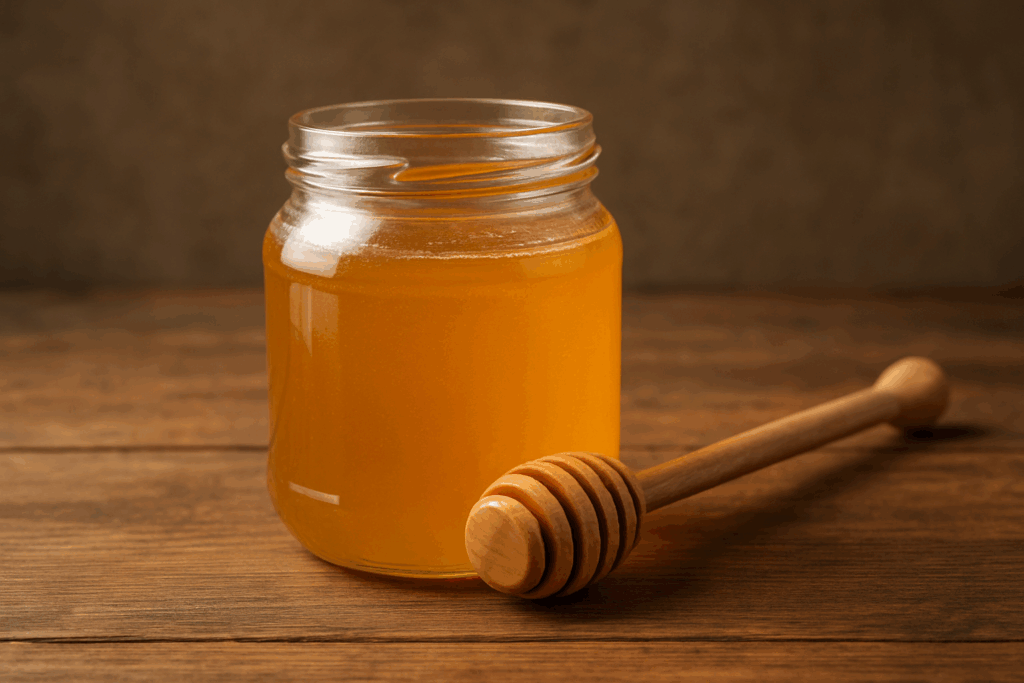
Regular Raw honey represents honey in its most natural state. After beekeepers extract it from hives, they only perform light straining to remove beeswax and debris. Unlike commercially processed varieties, this type bypasses pasteurization and intensive filtering.
This minimal processing approach preserves valuable components like pollen and propolis. Commercial honey undergoes high-heat pasteurization that destroys beneficial enzymes while extending shelf life and creating a smoother consistency. Though research continues into the exact health advantages of unprocessed honey, many consumers prefer it for its intact nutritional profile and natural state.
Key Health Advantages of Regular Raw Honey
Powerful Antioxidant Properties
Plant-derived polyphenols in raw honey act as robust antioxidants, combating free radicals and reducing oxidative stress. Regular consumption may lower risks of chronic conditions, including cardiovascular disease and certain cancers.
Natural Antimicrobial Action
Hydrogen peroxide and bee propolis give raw honey impressive antibacterial and antifungal capabilities. These properties help prevent bacterial infections, with Manuka honey showing particularly strong antimicrobial effects.
Wound Recovery Support
Hospitals use medical-grade honey to treat burns and wounds because it maintains moisture, promotes tissue regeneration, and prevents infection through its antimicrobial and protective qualities.
Immune System Enhancement
Phytonutrients in regular raw honey provide immune-boosting properties, helping your body combat harmful bacteria and inflammation. Moderate, regular consumption may strengthen natural defense mechanisms.
Relief for Throat Discomfort
As a time-tested home remedy, honey effectively soothes sore throats and eases coughs. Its thick consistency coats throat tissues, reducing irritation. Studies show it performs comparably to certain over-the-counter cough medications for improving sleep quality.
Digestive Health Support
Prebiotic compounds in raw honey nourish beneficial gut bacteria, essential for digestive health and overall wellness. It may also help alleviate minor digestive issues like diarrhea and ulcers.
Essential Nutrient Content
Regular Raw honey provides small but valuable amounts of calcium, magnesium, zinc, amino acids, and enzymes. While not a primary nutrient source, it offers more nutritional value than refined sugars.
Cognitive Health Protection
Antioxidants in raw honey may shield brain cells from damage and reduce inflammation. Emerging research suggests potential benefits for memory, mood, and reducing neurodegenerative disease risks like Alzheimer’s.
Introducing Mad Honey: Nepal’s Rare Treasure
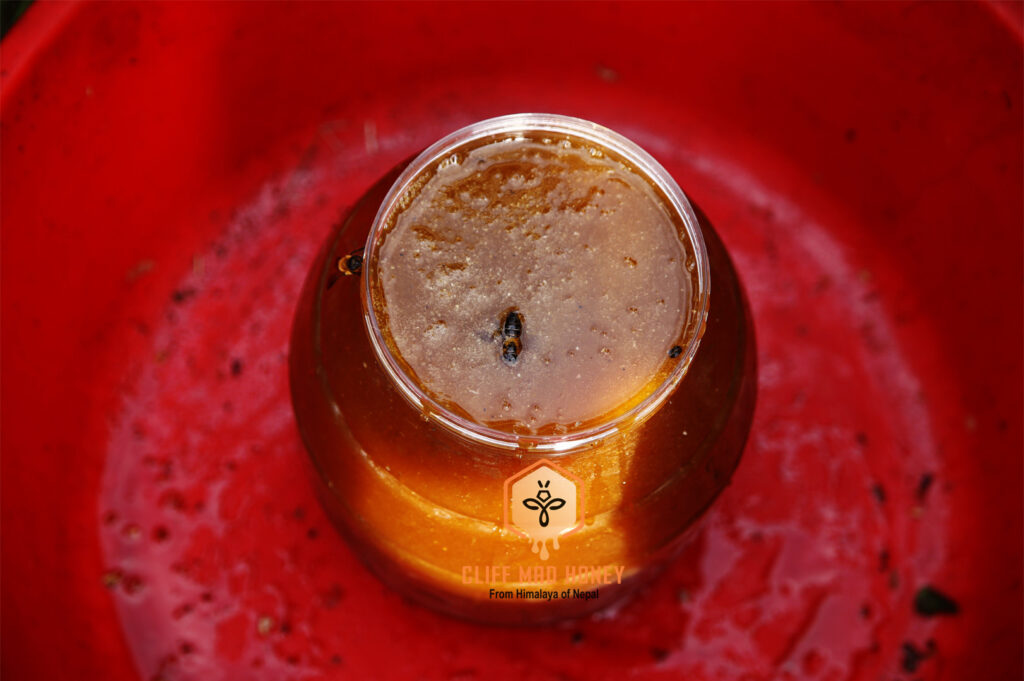
Nepal produces an extraordinary honey variety with unique characteristics that distinguish it from all others. While mad honey is also sold unprocessed, it’s fundamentally different from regular raw honey. Here’s the crucial distinction: all mad honey is raw, but not all regular raw honey is mad honey.
Regular Raw Honey vs Mad Honey: Understanding the Differences
Both varieties offer health benefits, and standard honey certainly provides nutritional value. However, mad honey intensifies certain effects. Here’s how they compare:
Origin and Production
Regular honeybees (Apis mellifera) create standard honey by collecting nectar from diverse flowering plants. They transform this nectar through regurgitation and evaporation, with salivary enzymes breaking down complex sugars while water evaporates, producing the familiar thick, sweet liquid.
Mad honey comes exclusively from Himalayan Giant Honey Bees (Apis laboriosa) that primarily feed on Rhododendron plant nectar. This specific floral source creates mad honey’s distinctive properties.
Nutritional Composition
Both types share similar nutritional profiles with natural sugars (fructose and glucose), enzymes, and pollen. The critical difference: mad honey contains grayanotoxin, a natural neurotoxin collected from Rhododendron flowers that creates its unique effects.
Appearance and Consistency
Regular Raw honey typically displays golden to amber coloring with thick viscosity. Mad honey appears reddish to dark red-brown, with thinner, more watery consistency. Both colors depend on floral sources—variable for raw honey, consistently Rhododendron-based for mad honey.
Flavor Profile and Scent
Regular Raw honey tastes predominantly sweet with floral aromas, varying by flower source. Mad honey offers a distinctly bitter, sharp taste with earthy undertones.
Geographic Distribution
Regular Raw honey is produced globally, while authentic mad honey primarily comes from Turkey and Nepal.
Price Considerations
Rarity and unique properties make mad honey significantly more expensive than raw honey. As with most exceptional products, premium quality commands premium pricing.
Sugar Levels
Raw honey contains slightly higher sugar content measured by glycemic index, though differences are minimal. This addresses questions about whether mad honey suits diabetic diets—it may be acceptable in moderation.
The key distinction: raw honey lacks the mind-altering compound found in mad honey. While raw honey provides antioxidants, minerals, and vitamins, its effects remain purely nutritional, unlike the psychoactive properties of grayanotoxin-containing mad honey.
Making Your Choice
Both honey types offer unique benefits for different applications. Your best choice depends on intended use. Raw honey works well for daily consumption, while mad honey’s cost makes regular use impractical for most people. Additionally, check your country’s regulations—mad honey is prohibited in some jurisdictions.
Frequently Asked Questions
Can regular raw honey produce intoxicating effects?
No, unless it contains grayanotoxins or is actually mad honey in raw form. Always verify product labels before purchasing.
Does regular raw honey cause side effects similar to mad honey when overconsumed?
No, mad honey’s psychoactive side effects stem from grayanotoxins absent in regular raw honey. However, following recommended serving sizes for any honey remains advisable.
Is regular raw honey safe for children and pets?
Avoid giving raw honey to children under four years due to infant botulism risk. For pets like dogs and cats, honey isn’t recommended because of high sugar content.
What distinguishes regular raw honey from regular processed honey?
Raw honey remains unprocessed and unheated, retaining more natural enzymes and nutrients. Regular honey undergoes pasteurization and filtering.
How long can regular raw honey be stored?
Properly stored in sealed containers in cool, dry locations, raw honey lasts indefinitely thanks to natural preservatives.
Does honey contribute to weight gain like sugar?
Excessive consumption can lead to weight gain due to caloric and sugar content. However, honey offers more nutrients and a lower glycemic index than refined sugar. Moderation is essential.
Can honey replace sugar for weight management?
Substituting honey for sugar may support weight management since it causes fewer blood sugar spikes and contains antioxidants. Portion control remains crucial.
How should honey be used for nighttime weight management?
Mix one teaspoon with warm water or herbal tea before bed. This may support metabolism and reduce late-night sugar cravings. Avoid excessive amounts.
When should honey be consumed for weight gain?
Combine honey with calorie-dense foods like milk, nuts, or smoothies during morning or pre-workout. Its natural sugars provide quick energy supporting weight gain goals.